Monday, 28 June 2021

Capitalised Communicable Conditions

 Things you could get, in the past: The Screaming Abdabs, The Heebie Jeebies, The Willies, The Collywobbles (although strictly speaking, The Willies were something someone gave you, rather than something you'd got).


Sunday, 27 June 2021

The Bristled Cadaver

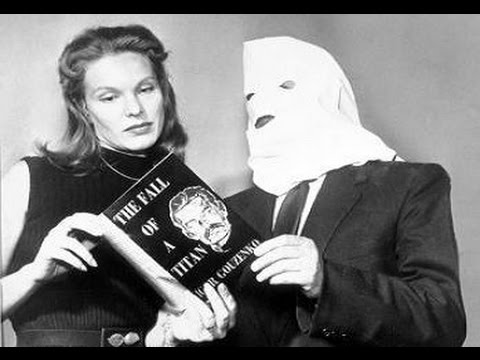
John Osborne, writing of George Devine, theatrical manager & director"After the nightly satisfaction of outfacing The Chairs audience, there was the beginning of his adventure with Samuel Beckett. If Ionesco's discordant willfulness intrigued himBeckett's temperament inspired him with almost apostolic awe. Even the peremptory sourness of Brecht couldn't match the incomparably bleached bone of Beckett and his liturgical 'toneless voice'.

Uncle Sam had the monstrous good fortune of actually looking like one of his own plays, a graven icon of his own texts. The bristled cadaver and mountain-peak stare were the ultimate purifier that deified all endeavour, pity or hope.


If the head of a Balzac or Ionesco or a dozen other sybaritically fleshed-out masters had been put onto the Irishman's torso, the response to the purity of that 'toneless voice' might not have been so immediate.                                                                               Furthermore, for George, he had the impeccable credentials of French cultural hauteur." 

Almost a Gentleman, An Autobiography Volume II, Faber and Faber, London, 1991

Thursday, 13 May 2021

The Suit

 Some years ago I bought a vintage suit. It’s made from ginger tweed that’s thicker than the cloth anyone would use to make an overcoat today, and while the jacket is cut close, with a nipped in waist, the pants are huge, with the ‘waist’ band fitting snugly under my sternum, and vast flapping legs that would billow in the wind like flags if the material wasn’t so heavy - they're so wide that they’re draughty in cold weather. From the cut, it’s probably from the 30s or 40s, and couldn’t in any case be later than the 50s, I would have thought


The Suit in Haparanda

Shortly after getting it, I wore it to visit a pub near my flat. It was (and still is) in a historically working class area of 1950s council housing, alleys with Dickensian leftovers, and a few landmarks of Cockneydom from song and legend. Despite only being 20 minutes’ walk from my flat, which was near The Angel, it’s in EC1, which I suppose makes it the City rather than the East End.

While I was ordering my first pint, the landlord came over and introduced himself. He said he used to be a tailor, and he couldn’t help noticing my suit. We spoke about where I got it from, and various details of construction and style. My drink was on the house all night, and came with whiskey chasers, no matter how much I said I didn’t want them. In a short while, other men in well-tailored suits with interesting details began to arrive, and whenever I went to the bar, I would find myself in conversation with men slightly older than myself, discussing the intricacies of Mod fashion, and differences in details and style between where I come from and London at the time. One man was wearing a Victorian-style frock coat, and another a toned-down drape suit in a kind of restrained Ted style. The pub regulars seated on the stools at the bar also introduced themselves, and also offered to buy me drinks, which I tactfully declined.

On subsequent visits when the landlord wasn’t around, I wasn’t entirely surprised that my new best friends who sat at the bar completely ignored me, as they had on the many occasions previous to my being made a fuss of by the landlord.

The next time I was there when the landlord was present was with my wife and her brother and his wife, who were visiting from Sweden. They were to have what turned out to be an evening to remember. 

After the landlord had favoured us with his mark of approval, all the regulars once again made their way to our table to tender their very fulsome respects, and we were eventually compelled to move to a regular’s table by the exercise of his considerable force of personality, as his invitations became almost threatening. He was wearing a Nehru suit and was loaded with more bullion bling than the late Bobby George - ropes of gold chains  and sov rings forming a row of knuckle dusters on each hand. He was in his 60s, and despite his age, had an air of physical danger. He was whipcord thin with a face like a skull, that managed to sneer malevolently even while smiling (not that he smiled that often). We were inundated with drinks bought by him and sent by well-wishers, and we each had a queue of pints and shorts lined up in front of us all night. Conversation was a little difficult because this was Friday night and there was a turn on, belting out 50s and 60s pop over a karaoke-style backing track. I nonetheless managed to talk to our new drinking companion, having been given the place of honour at his left elbow. 
Aside from our new friend’s appearance, I had begun to understand what kind of circle I’d been charmed into on my last meeting with the landlord from his answer to me when I asked where he’d been since then. He’d been ‘away’, but he told me that the pub was in his wife’s name (I knew that practically the only qualification for a publican is to have no criminal record, so I actually understood why that was relevant), and asked me if I knew Newmarket, where he’d most recently been visiting the stables where he kept a few racehorses. He also mentioned that he'd started taking an interest in the career of a young boxer.

So I was pretty sure my neighbour’s appearance wasn't just a hard man pose, but everything still felt a bit unreal, like finding myself in a Guy Ritchie film, and I made the mistake of pushing my luck. 
Even though I knew he didn’t like me, and probably thought I was a middle-class tosser, and the respect he was showing was purely because of the landlord (who presumably ranked quite a bit higher in the crim heirarchy), I pushed my luck. I asked him what he did. He gave me a sharp look, and said he was retired. I asked him what he did before he retired. He gave me a longer look and paused before answering.
“I was an engineer.” in a flat tone that didn’t invite any further discussion.

And then I pushed my luck a bit further.
"What kind of engineer, Jack*? A civil engineer, a mechanical engineer, a…”

Before I got any further, I got a look of considerable annoyance, and he cut in with:
“I made problems go away - alright? Why all the fuckin’ questions?”

At that point, despite the amount I’d drunk, I felt a sudden spurt of fear, I understood that this wasn’t a Guy Ritchie film, that this man wasn’t an actor, that the way he was dressed wasn’t a joke, and that actions could have consequences I wouldn’t normally anticipate.
I was careful not to transgress the boundaries of our brief window of conviviality after that.

The next time I was in, the landlord wasn’t, and the regulars didn’t even glance in my direction. When I attempted to say hello to Jack*, he gave me a look of dislike and then ignored me.

After that, I didn't see the landlord again, or his underworld dandy friends, and I remained invisible to the other customers.

*Not his real name
The late Bobby George


Thursday, 22 October 2020

Borreman


Title: Borreman


At: Hvitsten Artwalk, Hvitsten near Oslo, Friday 15.7.16


Concept: Folk rituals are a rich and historic manifestation of popular culture; a kind of people’s performance art. An extraordinary number are still observed in the British Isles, across every region and throughout the calendar. Many persist in mainland Europe; but in Scandinavia there are few, and in Norway almost none.

This performance transposes a performance from Britain to Norway.


The Burryman is a herring-charming ritual of east coast fishing communities in Scotland. A man chosen by vote is paraded around town wearing a bowler hat, balaclava and clothes completely covered in the small, spherical, velcro-like fruit of the Burdock plant and given whisky to drink through a straw in every pub. The thousands of burdocks needed must be collected only by the Burryman, and used while still green. He is forced to walk with his legs held apart and his arms extended, otherwise the burrs would cling to each other. The weight of the burrs is so great that he holds upright wooden staves to relieve the burden on his arms and shoulders.


Synopsis: The fruits of the burdock (Arctium lappa, genus Arctium, Norwegian: Storborre) were collected and attached, and the embellished performer appeared at an arts festival in a seaside village on the Oslofjord.


photo AW


Number Stations


I used to listen to these Cold War spy broadcasts in the late 60s and early 70s, on one of these, which was given to me by someone who captured it from a German unit in WWII and afterwards used it as a domestic radio. The British and DDR transmissions are jaunty, almost cheerful even, but at the same time have a sinister quality that all of the Number Stations output shares. My early enthusiasm for repetitive electronica made the appreciation of Kraftwerk a foregone conclusion.

Watercolours

On ladder plying hose, Ben Vautier
Watercolours, Musée d'Art Vivant, Nice, 6.7.81

"Conolly (sic), un performer du groupe de Liverpool genre Fluxus, réalise un merveilleuse petite pièce. Il s'installe sur le podium avec un chevalet et de la peinture à l'huile (sic) pour faire un paysage. Moi même sur un échelle un peu plus haut dans l'ombre avec un lance d'arrosage je l'arrose comme s'il pleuvait. Au fair et â mesure que son tableau se délaie â l'eau il le dechiré et en fait un autre. 7/10" - Ben Vautier's magazine 'Ben-Art', August 1981.

I contacted Ben when I was in the area to visit friends who were at the Fondation Karolyi artists' colony in Vence, and he invited me to come to his home in the hills above Nice. When I got there, he told me that it was the site of an international Fluxus convention that evening, that I was billed to appear as the official Fluxus artist representing Liverpool, and that I had two hours to come up with an idea. Using materials to hand, I said that I would paint the view at sunset in watercolours while he sprayed me and the easel with water, so that the image was constantly washed away and replaced as the light changed, eventually leaving a ghostly composite image to be torn off the pad and itself replaced. 

Saturday, 11 July 2020

Ipcress and Quiller

Two films with themes by John Barry, both Cold War spy thrillers, released one year apart. Both use the cimbalom, a Hungarian folk instrument like a cross between a xylophone and a zither (the other unusual instrument heard in the Quiller theme is a musical saw).

The Ipcress File (Sidney J. Furie, 1965) features a brainwashing machine called The Mind Processor, inspired by Illinois Institute of Technology's Knowledge Box, later to develop into the vr CAVE. The electronic soundtrack for The Mind Processor was by Brian Hodgson at the BBC Radiophonic Workshop. 
IPCRESS: Induction of Psycho-Neuroses by Conditioned Reflex with Stress
Best British Film of 1965 (BAFTA)
Listen to The Ipcress File theme
Michael Caine as Harry Palmer
The Quiller Memorandum (Michael Anderson, 1966) is a potentially great film with a fatal flaw.
"Noted for its plot twists and the portrayal of Quiller as refreshingly vulnerable and occasionally inept"* and a "deliberately paced but engrossing script"* by Harold Pinter, starring roles for Alec Guinness and Max von Sydow, location filming in what was then West Berlin with a capital W - but: the miscasting of George Segal in the leading role. Aside from the fact that he's better known for (and suited to) light and humorous parts, there is the unalluded to anomaly of an American being part of the British secret service.
                                              *Lee Pfeiffer, Quiller article in Britannica
Max von Sydow as Oktober, George Segal as Quiller
 Listen to The Quiller Memorandum theme

Bonus track. Matt Monro, former London bus driver, and the man of whom Frank Sinatra said "If I had to choose three of the finest male vocalists in the singing business, Matt would be one of them" recorded a vocal version not used for the intro or end credits, but which is heard playing on the radio in Quiller's hotel.