Monday, 25 January 2016

Horror

We have in recent years seen a return of Victorian horror vacui. Just as the Victorians couldn't leave a stone unturned in their architecture, a surface or margin free from arabesques, frisks of foliage, geometric Greek friezes, acanthus acroteria, Gothic finials and crockets; a fabric unladen with dense patterns, florid swirls, pinstripes, herringbones and dripping with frills, ribbons, borders and ribbons; wallpaper... I could go on, but you get the idea.

Now though, instead of artistic or decorative ornament, we have brands, logos, tagging and graffiti. 

The difference is, the Victorian decoration works like small trills of music or contrapuntal variation on the main theme, while what we have now is like truck reversing warnings or someone shouting their name through a megaphone.

I noticed brands appearing on the back of coats recently, usually on the right shoulder, and I was trying to remember what that reminded me of. Although the ? hovered just out of reach, I knew it had worrying or ominous associations. 

The ? was in pictures of Jewish ghettos in Nazi Europe, with people with a Star of David in just the same place on the backs of their coats. 


The Nazis liked to brand people as well as clothing, with tattoos - their own, the SS, with their blood group, and concentration camp inmates with a number. Then there's the ever-growing popularity of skulls as decorative devices. Say 'totenkopf' instead of skull and that's another fashion trend channelling the Nazis. 
I suppose it's subconscious rather than deliberate, and to do with the never-ending fascination with the Nazis and their evil glamour. We seem to be exposed to more about them and the Second World War as time goes on, rather than less.

It's as I quoted Kurt Vonnegut in  https://robocono.blogspot.com/2015/10/salut.html

"Our war will live forever in showbiz as other wars would not, because of the uniforms of the Nazis" (Timequake, Jonathan Cape, London 1997, p.23).

Monday, 30 November 2015

Winter is Hereby Cancelled


I took part in the 2015 Hvitstensalong on Saturday 3rd October. : https://www.facebook.com/events/697616150368669/

The performance title was 
'Winter is Hereby Cancelled (Herved er vinteren avlyst)', a situationist intervention in the progress of the seasons (suspending leaves from branches on thread).

The biodegradable sculptural installation produced will remain until nature decides otherwise. It's at the end of the trail, beyond Ola Hvitsten's work.

Photo Ingvild Holm


Photo Ingvild Holm


Photo Jon Lundell


Thursday, 19 November 2015

The Absolute Camel


When Samuel Beckett was at a rehearsal for Play in Germany, the actor wanted to know how his character had died. Beckett said that it may have been a traffic accident, or suicide, or perhaps peacefully in bed. When the actor insisted on knowing, Beckett turned to the director and said with a smirk "Ah, the Absolute Camel" (a joke of the time, since passed into desuetude: if an Englishman wrote about a camel, the title would be "The Camel", a Frenchman "The Camel and Love", and a German "The Absolute Camel").

Wednesday, 7 October 2015

Salut!

Like, I'm sure, the rest of you, I'm baffled by the sight of US civilians saluting as if they're in the army (yes - I am joking, I'm well aware of the fact that most people wouldn't notice anything of the kind, or waste a second's thought on it if they did; but stick with me, this actually is going somewhere). I mean putting their hand up to their eyebrow, holding it there for a bit, and flicking it down again.

You see, civilians aren't supposed to salute like that. (I'm only talking about America, you understand, most countries don't have any rules about this type of thing.)


Presidents are the most prominent culprits, and it all seemed to start with Ronnie Reagan, if my memory serves me well

Obama continued the tradition, but he sometimes got it right.

That's the civilian salute, to the flag usually. But why did they need to invent a special salute for civilians? 
It's because civilians bare their heads as a sign of respect when they salute the flag, and in most armed forces in most countries, a salute can only be made with something for the hand to touch -  the peak of a cap or helmet. If an officer comes into contact with lower ranks who are bareheaded, they just stand to attention with their arms at their sides. The origin is supposed to be in knights in armour raising the visor of their helmets when they met, to reveal their faces and indicate they weren't about to attack.

So, given that civilians actually have their own salute, where does the idea of  saluting without a hat on come from? The answer, which I came across while perusing my copy of The Bluejackets' Manual (19th edition, United States Naval Institute ISBN 0-87021-109-9, since you ask), is, surprisingly, the US Army and Air Force. In America, only the Navy insists on a hat being worn to return a salute. Who would have thought it?

You've been very patient so far, and now I'll get to the point of this post.

The present civil salute only dates from 1942. What did everyone in America do first thing at work, school, office or police station when they were saluting the flag before then?


                               THEY GAVE A NAZI SALUTE! 


Except, of course, it's not a Nazi salute, or even a fascist salute. It's a Bellamy salute https://en.wikipedia.org/wiki/Bellamy_salute, and it's just one aspect of a neoclassicist tradition that prevailed across different national cultures in the early 20th century. 

The fascists and Nazis, with their Barnum-like talent for showmanship and overstated Hollywood-esque flash style, snapped up lots of early 20th century design icons and tainted them forever by their evil association. 
The neoclassicism on steroids architecture we now think of as fascist can be found in the US (1930s govt. buildings, especially post offices, complete with eagles), the Soviet Union (their New York World's Fair pavilion was like a mirror image of the one Nazi Germany built facing it), and even Britain: Walthamstow Town Hall.

And perhaps most sinisterly appealing of all, their uniforms. The cut of the notoriously glamorous SS black and silver combo (not designed by Hugo Boss, incidentally, but by an undistinguished painter and commercial artist, SS-Major Carl Diebitsch) comes from British uniforms of the First and Boer Wars, themselves inspired by shooting outfits like the Norfolk jacket worn by 19th c British landed gentry, and the distinctive contrast of the silver detail on black and the grinning skull comes from the uniform of the Prussian hussar.

We'll never be allowed to forget their evil genius for style, and we'll always be forced to endlessly re-view the Second World War because, as Kurt Vonnegut put it: 

"Our war will live forever in showbiz as other wars would not, because of the uniforms of the Nazis" (Timequake, Jonathan Cape, London 1997, p.23).

Tuesday, 22 September 2015

On A Time-Based Basis

Ever noticed how things are always 'on a daily basis', rather than daily, or every day? Or a weekly basis, or whatever it might be? 

But 'on a daily basis' has only itself replaced the previously universal '24/7' as an even more long-winded way of saying 'every day'. This is part of a growing tendency for catch-phrases and colloquialisms to be more of a mouthful than the word or phrase they replace (see: http://robocono.blogspot.com/2014/10/a-lexicon-of-transatlantic-prolixity.html), a reversal of what might be called the vernacular imperative through much of history.

It parallels the proliferation of products giving an illusion of choice which conceals an actual reduction of choice that is one of the hallmarks of late model capitalism, as for example with beer, as I've already pointed out: http://robocono.blogspot.com/2015/09/booze-ocide.html

Not only are more words used to say the same thing, but the use of certain words and forms of words seems to be seen more and more as essential. Nothing new about that of course, catch phrases and words that constantly come in and go out of fashion have always been a feature of the pronouncements of journalists and spokesmen, businessmen, or 'experts' from any walk of life. That happens as a kind of overspill from what is properly called jargon - the specialised vocabulary that people working in any particular field use to communicate about their particular field with each other.

No, the thing is that ordinary people now use deracinated jargon with each other, to talk about things in daily life. Jargon often uprooted from the world of 'spokesmen' (and women of course), and usually spun out of nothing by PR functionaries, the language of the press release and the company prospectus. 

Take 'problem', for instance. Someone in some PR company in the US in the 80s decided this word has negative connotations - which, of course, it does, by definition - so they co-opted the word 'issues', previously meaning: things which have come to be (as, originally, in the specific sense of 'progeny'), or developments which have appeared and need to be discussed, in the sense of 'I would take issue with you over that'. 
This substitution became common usage among the different professions, and then spread to the general population. So now we have two words used interchangeably; one with a very specific meaning, and one which now has two meanings, with the original meaning with all its subtlety being eclipsed. Same thing with 'just', which used to mean only just, or precisely, and now substitutes in every case for 'only': 'The murderer's victim was just 18.'

For other examples of those words whose boxes have to be ticked if any statement of any length is to attain credibility or be taken seriously, I give you:

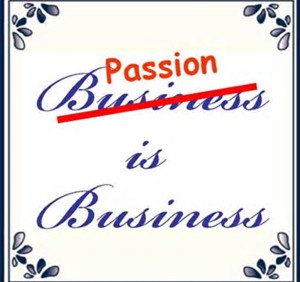
 'passion', 'icon' (in all its forms, 'iconically iconic icon' sounding horribly inevitable), 'vibrant'/ 'vibrancy'. 

These words aren't longer, or have more syllables than words they replace, because they don't replace any other words. For instance, it didn't used to be thought necessary, for, say, a job applicant to spell out in their application the fact that they had some kind of leaning towards or interest in the subject or nature of the occupation. 

Next time you hear someone say the word 'inappropriate', pause to think if they actually mean anything other than 'bad'.