Tuesday, 28 October 2025

 I met Iggy Pop in a brainbending encounter in 1977. I was meeting friends at The Rainbow in Finsbury Park to see Iggy Pop plus The Adverts, and I was early, so I went into the pub next door (the George Robey, gone now) for a pint.

I went into the snug, where there was only room for a couple of people at the bar, and stood next to someone who was waiting to be served. When I glanced round at him, it was Iggy Pop.
It's something of a cliche to say that you were surprised when meeting someone famous to see that they were shorter than you imagined, but that was, nonetheless, my first thought.
I said: 'Aren't you Iggy Pop?'
He said he was, and I asked him what he was doing here when he was meant to be doing a concert in 40 minutes (or whatever it was). He, unsurprisingly, said he wanted a drink, and I asked him if I could buy him one. He said yes, I asked him what he wanted, and he asked what I was having. I said Guinness, and he said he'd never had Guinness before, but he'd like to try one. I bought it, he said he liked it, we drank our pints, he downed his and he left.
I used to drink rather quickly in those days, but he was quicker.
I can't remember much of what else was said, something about how Guinness was available in the US but somehow he'd never tried it, but it's occurred to me since that he was perhaps after a quiet drink on his own before he had to perform, and I may have spoilt the moment for him. But you'd think the pub next door - and it was literally next door - to the venue would be an odd choice if you wanted a quiet drink on your own.
I thought of this while enjoying the counterintuitive version of This Magic Moment on the soundtrack of Lost Highway, which I’d not heard before and intended to post here. It’s actually Lou Reed, I now see, but I don’t see that minor detail needs to stand in the way of telling a good Guinness drinking with a major bass/baritone US punk icon from the 70s story.
Listen here


Sunday, 29 June 2025

There is a scientific theory that our universe is a computer simulation, and lots of conspiracy theorists treat The Matrix as a documentary.

Reality TV is a genre of popular entertainment, which unlike a documentary, presents a wildly overblown, tacky, pumped up caricature of human interaction, with a cast of exhibitionists, deluded half-wits, dupes and desperately sad cases hand-picked and manipulated to gratify a shamefully cruel voyeuristic tendency in its audience.

Trump is the most powerful man in the world - again. He didn't get there by finally reaching the pinnacle of a successful career in party politics, or by success in any other area which would have previously counted.

Ahead of his winning presidencies, the only thing Trump succeeded at was reality TV. He failed in everything else he did, including, ultimately, property development and being rich - if he had simply put the money his father originally gave him in safe stocks and bonds, he would have had more money than he actually did.

Trump runs his life, and the USA, as if he’s starring in his own reality TV show.
In addition to being unable to, or choosing not to, distinguish between observable reality and reality TV, Trump acts as a self-declared follower of Norman Vincent Peale
and by extension, Goddard’s Law.
Goddard’s Law (of assumption) states that thinking about something will make it happen, named after a religious nutcase called Neville Goddard. Peale’s self-help/business cult of 'positive thinking’ promotes the idea that if you have positive thoughts they will come true and you will succeed and be rich, and people who tell you otherwise are trying to stop you succeeding. This is where Trump's idea of false news comes from, and his violent antipathy to anyone who tries to tell him anything he doesn’t like.

Why did Trump decide to run for president in the first place? It came from his ‘birther’ social media campaign against Barack Obama, with Trump's first major political speech being at CPAC, the Conservative Political Action Conference, in 2011.
At CPAC in 2017:
'Trump said he "loved" giving that speech. According to him, the speech "gave me an idea" to get into politics in a serious way.
Trump told the story,
"I walked the stage on CPAC -- I'll never forget it, really. I had very little notes and even less preparation. So when you have practically no notes and no preparation and you leave and everyone was thrilled, I said, 'I think I like this business.’"
So there you have it. From Trump's own mouth: He ran for president because he liked he could get praise with no preparation.’
Elite Daily, 24.2.17

With the restraints on his impulses that were exercised by responsible people the first time around removed by the installation of sycophants and zealots, whatever thoughts Trump now posits really do come true; he is ruler of an empire of which Karl Rove famously said ‘when we act, we create our own reality’, and we are living not in a computer simulation or a version of The Matrix, but in Trump’s reality TV show.

Saturday, 25 February 2023

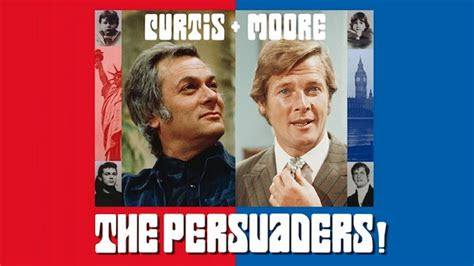
The Persuaders!

 'The Persuaders!' (which had perhaps the best theme music ever) was 'Snobbar som Jobbar' in Sweden (pronounced Snobbarr som Yobbarr) which translates as Snobs with Jobs - a bafflingly perverse plurality, given the series' central theme contrasting Moore's posh-voiced Brit snob, singular, with Curtis' 'by my own boot straps from the streets of New York' character.

Other notable losses in titular translation include '007 Dies Twice' (You Only Live Twice, Japan), 'I'm Drunk and You're a Prostitute' (Leaving Las Vegas, Japan), and, of course 'Meetings and Failures in Meetings' (Lost in Translation, Portugal).

Die Zwei!/Amicalement Votre/De Versieders!/Kaygisizlar


Saturday, 17 December 2022

Full Disclosure

 Motorcycle: 1962 Triumph 3TA with 5TA 490cc cast iron barrels and aluminium head, 12v conversion with twin coils, Kirkby Rowbotham electronic ignition distributor kit and Cibié quartz halogen headlight

Watch: 1945 British Army issue Timor ‘Dirty Dozen’ WWW (Watch, Wrist, Waterproof)

Suit: model’s own (like everything else)

Shot using 1938 Zeiss Ikon Ikonta 521/16 120, Tessar 3.5/7.5 cm lens, Compur-Rapid shutter

Location: 18 Canonbury Place, London N1

Date: 1986


Tuesday, 12 October 2021

Northern Lights

 Looking northeast from our building at sunset last night. Followed later by a more low key but equally spectacular glimpse of the Northern Lights.

photo: Tjøstheim Constantin Korsvold Nikolay
After hearing a G2 class solar flare event was on its way, I was checking the northern skies at 1 am. They were clear, except for a peculiar dead black meniscus with a sharply defined geometric margin above the northern horizon. The edge was just as smooth and exact through binoculars. 

At five past one, fingers of vivid green light with golden margins suddenly appeared, one at a time and intermittently, springing into view from below the horizon, growing upwards beyond the meniscus and wavering before dying down again. It was so affecting, despite being exactly what I was actually looking for, that 'an involuntary cry of wonder was forced from my lips'.

Two minutes later, it was gone.
I have made frequent visits to these latitudes in Sweden over the past 30 years, and many (but less) to the vicinity of the Arctic Circle, always hoping to see the aurora, but always, whenever there was activity, it was obscured by cloud, or latterly, the glare from the floodlights of the out of town shopping outlets around the world's northernmost IKEA. The last time I saw the aurora was in Whitehaven in 1974, which was a much more extended and powerful display. The solar cycle was at its lowest last year, and it's just started building towards another peak in 2025, so there are more displays in lower latitudes to come

Monday, 28 June 2021

Capitalised Communicable Conditions

 Things you could get, in the past: The Screaming Abdabs, The Heebie Jeebies, The Willies, The Collywobbles (although strictly speaking, The Willies were something someone gave you, rather than something you'd got).


Sunday, 27 June 2021

The Bristled Cadaver

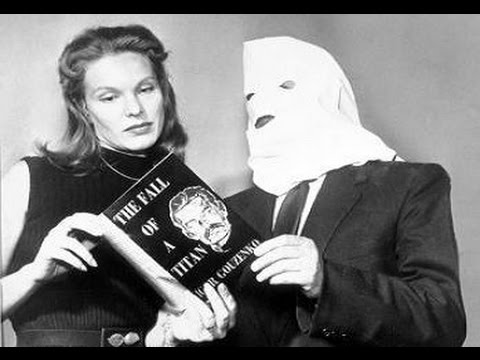
John Osborne, writing of George Devine, theatrical manager & director"After the nightly satisfaction of outfacing The Chairs audience, there was the beginning of his adventure with Samuel Beckett. If Ionesco's discordant willfulness intrigued himBeckett's temperament inspired him with almost apostolic awe. Even the peremptory sourness of Brecht couldn't match the incomparably bleached bone of Beckett and his liturgical 'toneless voice'.

Uncle Sam had the monstrous good fortune of actually looking like one of his own plays, a graven icon of his own texts. The bristled cadaver and mountain-peak stare were the ultimate purifier that deified all endeavour, pity or hope.


If the head of a Balzac or Ionesco or a dozen other sybaritically fleshed-out masters had been put onto the Irishman's torso, the response to the purity of that 'toneless voice' might not have been so immediate.                                                                               Furthermore, for George, he had the impeccable credentials of French cultural hauteur." 

Almost a Gentleman, An Autobiography Volume II, Faber and Faber, London, 1991

Thursday, 13 May 2021

The Suit

 Some years ago I bought a vintage suit. It’s made from ginger tweed that’s thicker than the cloth anyone would use to make an overcoat today, and while the jacket is cut close, with a nipped in waist, the pants are huge, with the ‘waist’ band fitting snugly under my sternum, and vast flapping legs that would billow in the wind like flags if the material wasn’t so heavy - they're so wide that they’re draughty in cold weather. From the cut, it’s probably from the 30s or 40s, and couldn’t in any case be later than the 50s, I would have thought


The Suit in Haparanda

Shortly after getting it, I wore it to visit a pub near my flat. It was (and still is) in a historically working class area of 1950s council housing, alleys with Dickensian leftovers, and a few landmarks of Cockneydom from song and legend. Despite only being 20 minutes’ walk from my flat, which was near The Angel, it’s in EC1, which I suppose makes it the City rather than the East End.

While I was ordering my first pint, the landlord came over and introduced himself. He said he used to be a tailor, and he couldn’t help noticing my suit. We spoke about where I got it from, and various details of construction and style. My drink was on the house all night, and came with whiskey chasers, no matter how much I said I didn’t want them. In a short while, other men in well-tailored suits with interesting details began to arrive, and whenever I went to the bar, I would find myself in conversation with men slightly older than myself, discussing the intricacies of Mod fashion, and differences in details and style between where I come from and London at the time. One man was wearing a Victorian-style frock coat, and another a toned-down drape suit in a kind of restrained Ted style. The pub regulars seated on the stools at the bar also introduced themselves, and also offered to buy me drinks, which I tactfully declined.

On subsequent visits when the landlord wasn’t around, I wasn’t entirely surprised that my new best friends who sat at the bar completely ignored me, as they had on the many occasions previous to my being made a fuss of by the landlord.

The next time I was there when the landlord was present was with my wife and her brother and his wife, who were visiting from Sweden. They were to have what turned out to be an evening to remember. 

After the landlord had favoured us with his mark of approval, all the regulars once again made their way to our table to tender their very fulsome respects, and we were eventually compelled to move to a regular’s table by the exercise of his considerable force of personality, as his invitations became almost threatening. He was wearing a Nehru suit and was loaded with more bullion bling than the late Bobby George - ropes of gold chains  and sov rings forming a row of knuckle dusters on each hand. He was in his 60s, and despite his age, had an air of physical danger. He was whipcord thin with a face like a skull, that managed to sneer malevolently even while smiling (not that he smiled that often). We were inundated with drinks bought by him and sent by well-wishers, and we each had a queue of pints and shorts lined up in front of us all night. Conversation was a little difficult because this was Friday night and there was a turn on, belting out 50s and 60s pop over a karaoke-style backing track. I nonetheless managed to talk to our new drinking companion, having been given the place of honour at his left elbow. 
Aside from our new friend’s appearance, I had begun to understand what kind of circle I’d been charmed into on my last meeting with the landlord from his answer to me when I asked where he’d been since then. He’d been ‘away’, but he told me that the pub was in his wife’s name (I knew that practically the only qualification for a publican is to have no criminal record, so I actually understood why that was relevant), and asked me if I knew Newmarket, where he’d most recently been visiting the stables where he kept a few racehorses. He also mentioned that he'd started taking an interest in the career of a young boxer.

So I was pretty sure my neighbour’s appearance wasn't just a hard man pose, but everything still felt a bit unreal, like finding myself in a Guy Ritchie film, and I made the mistake of pushing my luck. 
Even though I knew he didn’t like me, and probably thought I was a middle-class tosser, and the respect he was showing was purely because of the landlord (who presumably ranked quite a bit higher in the crim heirarchy), I pushed my luck. I asked him what he did. He gave me a sharp look, and said he was retired. I asked him what he did before he retired. He gave me a longer look and paused before answering.
“I was an engineer.” in a flat tone that didn’t invite any further discussion.

And then I pushed my luck a bit further.
"What kind of engineer, Jack*? A civil engineer, a mechanical engineer, a…”

Before I got any further, I got a look of considerable annoyance, and he cut in with:
“I made problems go away - alright? Why all the fuckin’ questions?”

At that point, despite the amount I’d drunk, I felt a sudden spurt of fear, I understood that this wasn’t a Guy Ritchie film, that this man wasn’t an actor, that the way he was dressed wasn’t a joke, and that actions could have consequences I wouldn’t normally anticipate.
I was careful not to transgress the boundaries of our brief window of conviviality after that.

The next time I was in, the landlord wasn’t, and the regulars didn’t even glance in my direction. When I attempted to say hello to Jack*, he gave me a look of dislike and then ignored me.

After that, I didn't see the landlord again, or his underworld dandy friends, and I remained invisible to the other customers.

*Not his real name
The late Bobby George


Thursday, 22 October 2020

Borreman


Title: Borreman


At: Hvitsten Artwalk, Hvitsten near Oslo, Friday 15.7.16


Concept: Folk rituals are a rich and historic manifestation of popular culture; a kind of people’s performance art. An extraordinary number are still observed in the British Isles, across every region and throughout the calendar. Many persist in mainland Europe; but in Scandinavia there are few, and in Norway almost none.

This performance transposes a performance from Britain to Norway.


The Burryman is a herring-charming ritual of east coast fishing communities in Scotland. A man chosen by vote is paraded around town wearing a bowler hat, balaclava and clothes completely covered in the small, spherical, velcro-like fruit of the Burdock plant and given whisky to drink through a straw in every pub. The thousands of burdocks needed must be collected only by the Burryman, and used while still green. He is forced to walk with his legs held apart and his arms extended, otherwise the burrs would cling to each other. The weight of the burrs is so great that he holds upright wooden staves to relieve the burden on his arms and shoulders.


Synopsis: The fruits of the burdock (Arctium lappa, genus Arctium, Norwegian: Storborre) were collected and attached, and the embellished performer appeared at an arts festival in a seaside village on the Oslofjord.


photo AW


Number Stations


I used to listen to these Cold War spy broadcasts in the late 60s and early 70s, on one of these, which was given to me by someone who captured it from a German unit in WWII and afterwards used it as a domestic radio. The British and DDR transmissions are jaunty, almost cheerful even, but at the same time have a sinister quality that all of the Number Stations output shares. My early enthusiasm for repetitive electronica made the appreciation of Kraftwerk a foregone conclusion.

Watercolours

On ladder plying hose, Ben Vautier
Watercolours, Musée d'Art Vivant, Nice, 6.7.81

"Conolly (sic), un performer du groupe de Liverpool genre Fluxus, réalise un merveilleuse petite pièce. Il s'installe sur le podium avec un chevalet et de la peinture à l'huile (sic) pour faire un paysage. Moi même sur un échelle un peu plus haut dans l'ombre avec un lance d'arrosage je l'arrose comme s'il pleuvait. Au fair et â mesure que son tableau se délaie â l'eau il le dechiré et en fait un autre. 7/10" - Ben Vautier's magazine 'Ben-Art', August 1981.

I contacted Ben when I was in the area to visit friends who were at the Fondation Karolyi artists' colony in Vence, and he invited me to come to his home in the hills above Nice. When I got there, he told me that it was the site of an international Fluxus convention that evening, that I was billed to appear as the official Fluxus artist representing Liverpool, and that I had two hours to come up with an idea. Using materials to hand, I said that I would paint the view at sunset in watercolours while he sprayed me and the easel with water, so that the image was constantly washed away and replaced as the light changed, eventually leaving a ghostly composite image to be torn off the pad and itself replaced. 

Saturday, 11 July 2020

Ipcress and Quiller

Two films with themes by John Barry, both Cold War spy thrillers, released one year apart. Both use the cimbalom, a Hungarian folk instrument like a cross between a xylophone and a zither (the other unusual instrument heard in the Quiller theme is a musical saw).

The Ipcress File (Sidney J. Furie, 1965) features a brainwashing machine called The Mind Processor, inspired by Illinois Institute of Technology's Knowledge Box, later to develop into the vr CAVE. The electronic soundtrack for The Mind Processor was by Brian Hodgson at the BBC Radiophonic Workshop. 
IPCRESS: Induction of Psycho-Neuroses by Conditioned Reflex with Stress
Best British Film of 1965 (BAFTA)
Listen to The Ipcress File theme
Michael Caine as Harry Palmer
The Quiller Memorandum (Michael Anderson, 1966) is a potentially great film with a fatal flaw.
"Noted for its plot twists and the portrayal of Quiller as refreshingly vulnerable and occasionally inept"* and a "deliberately paced but engrossing script"* by Harold Pinter, starring roles for Alec Guinness and Max von Sydow, location filming in what was then West Berlin with a capital W - but: the miscasting of George Segal in the leading role. Aside from the fact that he's better known for (and suited to) light and humorous parts, there is the unalluded to anomaly of an American being part of the British secret service.
                                              *Lee Pfeiffer, Quiller article in Britannica
Max von Sydow as Oktober, George Segal as Quiller
 Listen to The Quiller Memorandum theme

Bonus track. Matt Monro, former London bus driver, and the man of whom Frank Sinatra said "If I had to choose three of the finest male vocalists in the singing business, Matt would be one of them" recorded a vocal version not used for the intro or end credits, but which is heard playing on the radio in Quiller's hotel.


Saturday, 23 May 2020

Eh Joe


Eh Joe? was Beckett's first play written for television, broadcast on BBC2 on the 4th of July 1966 between 10.20 and 10.40pm, with Jack MacGowran as Joe, Sian Phillips as The Voice. 

This recording is from German TV. (Yes, I know, this is a bit laboured, but take the trouble to listen until the first solo - this the best performance of this much-heard classic I've come across)Eh Joe


                                                         Photo Jane Bown

Engines as Musical Instruments

Just like a musical instrument, the length, diameter, plenum effects, and size, frequency, duration, and pressure of pulses of gas going through a series of tubes that make up an engine can produce magical sounds. 
The accidental combination in Edward Turner’s Triumph Speed Twin motorcycle engine of 1937 in all its variations is one pinnacle of musical perfection through acoustic serendipity, but the supreme example for me is the Avro Vulcan bomber. The intake geometry and ducting designed by a team led by Roy Chadwick (who also designed the WWI Avro 504 and WWII Lancaster) and the Bristol/Siddeley/Rolls Royce Olympus engine literally made the earth move during low passes, with a sweet spot at wide throttle openings that produced turbulence vortices in the intakes for a sustained high frequency accompaniment.
I was privileged to attend Mildenhall US airbase in Suffolk's ‘hearts and minds’ open day for local residents in 1978. Two Vulcan bombers did synchronised aerobatic displays over the crowd, which culminated in them each coasting along just over the runway with the throttles barely open and making a low whistling noise, then going to full power and rocketing up at a steep angle, giving a deafening droning howl from the intakes at the same time as producing enough low frequency sound to not only make the ground shake, but also cause my diaphragm to vibrate in sympathy.

They were also there for 1982, when the open day had become a public airshow. An SR-71 Blackbird, the first stealth aircraft, that flew at 3 times the speed of sound, flew in from Beale AFB, Calif, made a rolling touchdown along the runway, and then shot up vertically on top of a blue flame about 20 feet long, disappearing from sight almost too fast for the eye to follow. 
But it wasn’t as loud as a Vulcan.
Listen here (don’t forget to turn the sound on: loudspeaker icon lower right).

                                                                                 Photo © M.Fisher

Little Richard Starkey

As so often in Beatles photos, Paul looks nauseatingly puppy-like, Ringo looks stupid and George looks as if he has Bell’s Palsy. John, unusually, just looks happy - he usually looks mocking and cynical. Little Richard looks like one of the Puerto Rican ‘extreme embalming’ corpses that get photographed sitting at their own wakes.

Wednesday, 12 September 2018

Treetotem

Temporary installation, Hvitsten Salong 2018

Installation of work, Pablo Castro, pipe, Howard Michels, glasses, collar and tie, artist's own. 

                                                     Photo © Ronald


Wednesday, 25 April 2018

Meet The Beatles


Sinister, grotesque, yet somehow strangely compelling. 
The prepubescent McCartney with his gigantic eyebrows, the disturbingly feminine Ringo, the disconcertingly misdirected gaze of this parallel universe George, and finally, the dead-eyed 1000 yard stare of the evil Genghis Khan-alike John. 

The Beatles that you could surely only Meet in a nightmare that would haunt your waking hours.

Saturday, 10 March 2018

Anglezark(e)

No.1 Anglezark Street, Kensington, Liverpool 7, 1957. Early Victorian terrace end corner shop (Planning application for Anglezark Street Project redevelopment approved 2.8.1961). 

"SANPIC Destroys sink odours, TURF, SENIOR SERVICE and WILLS’S "STAR" CIGARETTES, ASPRO (aspirin), Brooke Bond Tea, NEW STORK CHANGE YOUR COUPONS HERE (margarine), CUTTY SARK PIPE TOBACCO, TIZER (carbonated soft drink)."

The manor of Anglezarke near Bolton was the property of the Earls of Derby in the 16th century (The title refers to West Derby, not the county town. The West Derby Hundred was the southwest division of the county of Lancashire, which included Liverpool). Local soap magnate Lord Leverhulme built a reduced scale replica of Liverpool Castle on his estate at Anglezarke in 1900.

Thursday, 14 December 2017

Here Comes The Judge

Further to my earlier postHere Comes The Judge was the first rap record, notwithstanding Debbie Harry’s absurd claim to have invented rap with Rapture (1981).
The phrase was used by Pigmeat in his stand up comedy routine, performed on the Ed Sullivan Show in 1947. Sammy Davis Junior then used it, dressed in judge’s robes and a wig, on Rowan and Martin’s Laugh-In, 28.3.68, after which it was used as a catch phrase on the show, subsequently performed by Pigmeat himself, passing into popular usage, along with “That’s a no no” and "Very interesting - but stupid”,  among others. 
Pigmeat’s single was released July and August ‘68 in the US and UK respectively, reaching No 19 in both countries. 


The best rap record of all time is of course The Revolution Will Not Be Televised...

Saturday, 25 November 2017

Verticalability

Durational Performance 18.00-20.00 Thurs 30 Nov Baerum Kunsthall 

Rigging by Torgeir Gabrielsen Photo by Sigrid Z. Heiberg


Into the Void
French artist Yves Klein famously claimed he had flown in a performance in 1960; in this performance Connolly floated 4 metres up, conquering the upper atmosphere and ceiling space of the gallery.

Performance Proposal                                                                 © R.Connolly 2017

For: Baerum Kunsthall exhibition 30.11.17 – 17.12.17

Title: Into the Void

Concept: Klein’s Saut dans le vide meets Lawnchair man. 
Klein’s ’performance photographgives the paradoxical illusion of a man hurling himself into space above a drop that would injure or kill if the image were an accurate depiction of real life.
This performance creates the real-life paradox of what appears to be a man only being stopped by the gallery ceiling from being carried into space by an absurdly small number of helium-filled party balloons (5,000 would be needed in reality  )

Tech spec:
30 x party balloons
Ball of string
Double-sided adhesive foam pads (UK: Sticky Fixers, US: Buddies)
800kg suspension straps, wire rigging
Suspension seat
Hydraulic lift platform (Genie or scissor lift)

Synopsis:  The suspension seat is attached to the RFC ceiling beam using the lifting straps and rigging.
30 party balloons are filled with air and strings tied to them.
The balloons are attached to each other with adhesive foam pads, clustered around the straps until the straps are invisible, and the cluster glued to the ceiling,
The balloon strings are attached to the chair and the tension on the strings adjusted to give the appearance of the chair being suspended.
The lift platform is removed.
The audience is admitted.

Duration: 2 hours approx (duration of vernissage). 
Following the performance, the balloons began to detach from the ceiling and deflate, so that over time, the already obvious implausibility of the concept became increasingly manifest.

plus

Title: Per Ardua

photo Jon Lundell
Concept: The title is an abbreviation of the Latin motto Per Ardua Ad Astra (Through Adversity to the Stars) and refers to both the Space Race and the ephemera commemorating it that are the focal point of this exhibit, and Yoko Ono’s Yes* (1966), famously used as a means to meet Paul McCartney and John Lennon when she exhibited in a gallery whose owner knew McCartney.

Synopsis: A collection of lapel badges commemorating the early space missions pinned to a small plush display frame is hung on the wall at a height of approx 2.5m.
An illuminated magnifying glass on a piece of string is hung near it.

A ladder is leaned against the wall next to the display. This text is displayed on the wall by the exhibit.

*Yes consisted of a step ladder placed beneath a black canvas on the ceiling with a magnifying glass hung next to it, with the word YES printed in tiny white letters in the middle of the canvas.
Having discovered that Paul McCartney was associated with the gallery, Ono asked to show there. Having met him without result, she then applied pressure for John Lennon to be invited while she was hanging work before the opening and used the occasion to meet him, attempting to get into his car with him when he left. After he came to the opening, she bombarded Lennon with postal invitations and mail art pieces until he agreed to meet again, and the rest is history.
I was told this by John Dunbar, who ran the Indica Gallery with Barry Miles and Peter Asher (brother of McCartney’s girlfriend at the time), and he and Miles gave an abbreviated version in an interview for a BBC documentary on 60s art (
Art and the 60s: Politics and Performance).


"Verticalability - what a great word! Even if it might only exist for the duration of a few moments. Nevertheless, more than being a term or not, it points out directions and ways to walk on. The up and down, the over and the under, the below and above, the good and bed. In any sense, it is elusive and momentarily, not made for eternity. Who wants to live forever? Not us, neither do you.
Reaching out into space and it’s beyond, or digging deeper the mining caves towards the centre of the earth, human ambitions appear limitless expressed by a momentum delivered onward ever since the age of Sirum. The question today is when we are about to benefit from this or if it already is too late?" - Tammo Rist

Verticalability: Tammo Rist, Robert Connolly, Jon Lundell

at Baerum Kunsthall 30.11.17 - 17.12.17